Smart Daylight Signals: Integration with Building Automation Systems
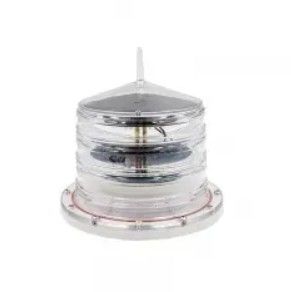
In the evolving landscape of industrial, maritime, and coastal infrastructure, the deployment of Smart Daylight Signals represents a pivotal shift toward autonomous safety monitoring. Integrating these systems within a centralized Building Management System (BMS) requires a precise understanding of hardware handshakes and electrical synchronicity. We provide the specialized components necessary for these installations, functioning as a dedicated hardware manufacturer and supplier for global infrastructure projects.
Delivering high-spec hardware that interfaces with current monitoring arrays is our responsibility at Seaonbag. Although we do not handle physical cable routing or on-site electrical contracting, we do supply the technical blueprints and signal logic needed for smooth integration. The integrity of the data loop between the master controller and the remote light fixture is the only factor that affects Daylight Signals' dependability.
The Mechanical and Electronic Interface
These days, solar-powered navigation lights need to be more than just stand-alone beacons. The physical and logical link is the main concern for a systems integrator or procurement officer. Our Daylight Signals use industrial-grade housing and standard mounting brackets, but the integration takes place in the internal electronics. Our primary focus is on offering hardware that complies with widely used telemetry standards in building automation.
The hardware used to integrate solar navigation lights into a larger facility network must be able to handle the voltage variations that come with solar charging cycles. In order to keep signal noise from contaminating the BMS bus, we design our units with regulated output stages. Our hardware enables real-time monitoring of battery health, charging status, and lamp integrity by using dry contact relays or Modbus RS-485 interfaces. For facilities where manual inspection is challenging or dangerous, this degree of transparency is essential.
Voltage Regulation and Power Management
Power consistency presents unique engineering challenges when solar power and centralized automation come together. While solar components vary according to irradiance levels, the majority of building automation systems run on a constant 24V DC backplane. Our components include integrated charge controllers that separate the internal battery voltage from the signal output to close this gap. In order to avoid false triggers or hardware damage, this guarantees that the Daylight Signals transmitted to the BMS stay within specified logic levels.
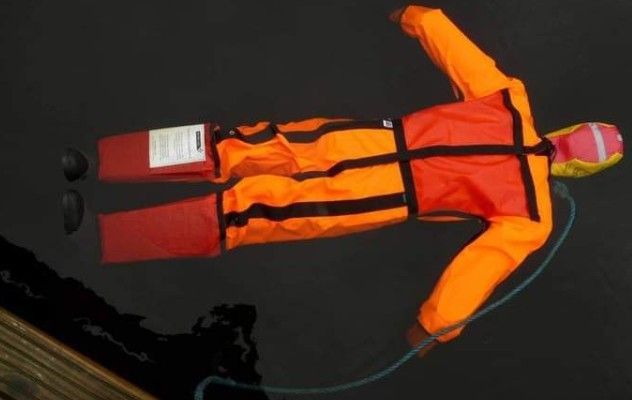
The longevity of these electronic interfaces is a top priority for Seaonbag as a manufacturer. We acknowledge that a technician's last line of defense is an immersion suit, but the vessel's first line of defense is dependable signaling. As a result, our hardware is designed to endure high salinity conditions while preserving the exact electrical resistance needed for long-distance data transfer. The integrator specifies the software logic that responds to these hardware inputs, while we provide the ruggedized components.
Signal Protocols and Data Acquisition
The protocol is the key to interoperability. The majority of industrial building management systems combine data from multiple sensors using BACnet, LonWorks, or Modbus. Our hardware provides the raw binary or analog data that these systems need because it is designed to be protocol-agnostic at the physical layer. A system integrator receives hardware that can report particular telemetry points when they specify our solar navigation lights:
- Luminous Intensity Verification: Confirming the LED array is drawing the correct current.
- Battery Depth of Discharge: Reporting the exact voltage level to the central hub.
- Photocell Override: Allowing the BMS to manually trigger the light regardless of ambient conditions.
The centralized system can automate maintenance schedules by using daylight signals. The BMS can initiate a work order before the unit malfunctions if the hardware reports a decrease in charging efficiency over thirty days. The high-fidelity sensors we incorporate into our manufacturing process directly contribute to this predictive capability. We are the system's "eyes," and the BMS is its "brain."
Procurement and Supplier Scope
Project budgeting requires procurement officers to have a clear understanding of the scope of work. Our business, Seaonbag, is solely focused on producing hardware. We do not install conduits or set up the BMS software's end-user dashboard. Delivering certified, high-performance hardware that satisfies the contract's technical requirements is our responsibility. Electrical contractors can concentrate on installation while we concentrate on component precision thanks to this clear division of labor.
Technical requirements frequently overlap when sourcing safety equipment. For example, a facility's emergency response teams may need an Immersion Suit in addition to advanced navigation lighting. Even though these products have different uses, they are all covered by the industrial safety regulations that we maintain. We continue to concentrate on the hardware's mechanical dependability, making sure that each terminal block and bolt pattern satisfies the demanding requirements of the maritime environment.
Engineering for Longevity
For any infrastructure project, the Daylight Signals hardware life cycle is an essential metric. To stop environmental deterioration, we use marine-grade aluminum housings and premium polycarbonate lenses. To reduce the possibility of moisture intrusion or vibration damage, the circuitry is internally encased in a potting compound. Our hardware's ability to sustain a steady signal for years without intervention is due to its mechanical robustness.
Mapping the physical outputs of the hardware to the digital inputs of the BMS is part of the integration process. For instance, a technician must map a 4-20mA signal to a 0-100% battery charge state to calibrate the signal range. We make this calibration simple for the system integrator by providing comprehensive technical data sheets and wiring diagrams. Our goal is to eliminate the uncertainty surrounding the hardware-to-software connection.
Technical Summary of Interoperability
To summarize the technical integration of our lighting solutions:
- Power Source: Independent solar arrays with integrated storage, isolated from the BMS power loop to prevent system-wide failures.
- Communication: Standardized relay outputs or digital bus compatibility for real-time status reporting.
- Mechanical: Corrosion-resistant materials designed for permanent outdoor exposure in coastal zones.
- System Logic: Hardware-level sensors that provide the raw data necessary for complex automation scripts within the building management environment.
The quality of the field devices determines how well any building automation strategy works. Integrators can create a more robust safety network by choosing specialized hardware. We continue to be dedicated to the development of solar-powered signaling technology, supplying the industrial parts that maintain the operation of coastal facilities and maritime lanes. We support the infrastructure that keeps international trade running smoothly and safely through careful engineering and an emphasis on hardware compatibility. As a supplier, it is our responsibility to give procurement officers the dependability they need and engineers the technical precision they need for a successful system commissioning.