High-Quality Under Tapes Designed for Waterproofing and Air Sealing Needs
In the United States, we recognize that moisture control and air leakage are the primary drivers of structural degradation and high energy costs. Utilizing high-quality Under Tapes is a fundamental step in creating a resilient building envelope. At SeaOnBag, we focus on providing technical insights that help builders and homeowners mitigate these risks. By visiting, we can find resources that detail the performance specifications required for modern construction standards.
The Critical Role of Under Tapes in Building Science
The physical barrier separating a home's conditioned interior from its unconditioned exterior is referred to as the "envelope" of the house. When various building materials meet at transition points, we use Under Tapes to create a continuous barrier. These intersections, like the joints between oriented strand board (OSB) panels or the gap between a window frame and the rough opening, are vulnerable to water and air intrusion.
Under Tapes' performance under stress is determined by their chemical composition. Because high-tack acrylic or butyl formulas hold their bond through the normal expansion and contraction of metal and wood, we seek them out. In the diverse climates of the United States, where temperature fluctuations lead to the failure of rigid seals, this flexibility is essential. We are effectively sealing the holes in our thermal armor and preventing the flow of moisture-laden air by properly applying these adhesives.
Testing and Validation Protocols for Water Management
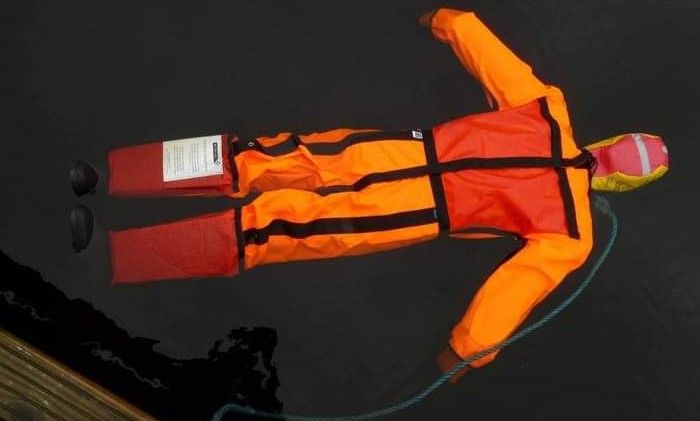
Before completing the external cladding, we frequently use a Water Training Dummy in our professional practice to model the interaction of moisture with a sealed surface. This enables us to verify that no liquid escapes our flashing and to observe drainage patterns. In order to verify that our application methods are sound and that the membranes we have selected are efficiently shedding water, we can see possible failure points in a controlled setting by using a water training dummy.
We should not omit the testing step. Saturated insulation and rotting studs can result from even a tiny leak in a corner. We determine whether gravity is working in our favor or against us by conducting controlled water tests with a water training dummy. In order to stop capillary action from drawing moisture behind the barrier, we must modify the lap or application pressure if we observe water collecting against a tape edge.
Material Performance and Selection
Adhesives are not all created equal. Materials are categorized according to their vapor permeability and UV resistance. In order to prevent wood rot in the wall cavity, we often need a tape that blocks liquid water but permits water vapor to pass through. Whether we are building in a desert environment or a humid coastal region, SeaOnBag provides technical data that enables us to match the specific tape properties to the local climate requirements.
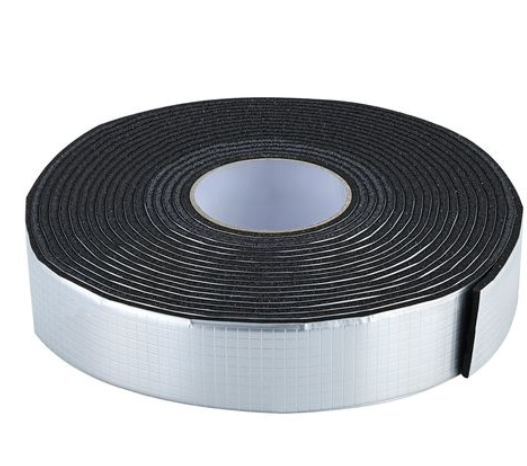
We commonly use Hatch Sealing Tapes for heavy-duty applications like sealing large utility access panels, roof skylights, and basement hatches. These stronger, thicker strips offer a seal that resembles a gasket and can tolerate high mechanical pressure. In locations where typical thin-film tapes may tear or lose their adherence because of surface irregularities or heavy traffic, we find that Hatch Sealing Tapes are especially good at stopping air loss.
Understanding Adhesive Chemistries
When we select our sealing products, we generally choose between three main types:
- Butyl-based Tapes: These are highly effective for sealing around penetrations like pipes or vents because they are very "self-healing" if a fastener passes through them.
- Acrylic-based Tapes: These often offer the best long-term durability and resistance to extreme temperatures. They bond more strongly over time as they cure.
- Modified Bitumen: While older technology, these are still used in specific roofing applications where a very thick barrier is needed.
Installation Best Practices for Long-Term Durability
We have found that even the highest-quality Under Tapes will fail if installation is rushed. We follow a strict set of steps to achieve a permanent seal that lasts the life of the building.
Surface Decontamination
First, we clean the substrate. The adhesive and the building material are separated by dust, sawdust, and oils. When working with metal or vinyl components in particular, we prepare the surface with a dry brush or a suitable solvent. We also look for invisible "micro-frost," which inhibits a bond, in cold weather.
Proper Lapping Techniques (The Shingle Principle)
We always use the shingle-lap method when installing underlayment. Accordingly, we begin at the bottom of a wall or window and work our way up. Because of this orientation, water can pass over the seams instead of getting caught behind the tape's upper edge. This straightforward reasoning shields the interior from rain caused by the wind. An "up-lap" that collects water and channels it into the wall is created if the top piece is taped first and the bottom piece last.
Mechanical Pressure Application
The majority of high-performance Under Tapes are sensitive to pressure. We apply firm pressure over the whole surface using a J-roller or a comparable tool. The adhesive is forced into the substrate's microscopic pores in this crucial step, forming a mechanical bond that will not peel over time. Rarely is a lifetime seal guaranteed by merely hand-smoothing the tape.
Addressing Air Leakage and Energy Efficiency
We use these materials to prevent air leaks in addition to waterproofing. The performance of insulation is destroyed by uncontrolled air movement, which carries heat and moisture. Water vapor carried by air can condense on cold surfaces inside a wall if air can pass through it. We can better regulate the indoor environment by caulking the edges of our windows and the seams of our house wrap. The components that SeaOnBag offers enable us to meet these airtightness objectives without sacrificing the home's structural soundness.
Hatch Sealing Tapes are also used in attic access points. The biggest source of air loss in a house is frequently the attic. The "stack effect," which occurs when warm air rises and escapes through the top of the house while drawing cold air in through the bottom, is avoided by using hatch sealing tapes on the frame where the attic door rests.
Practical Challenges in the Field
There are many difficulties when working on a construction site in the United States, ranging from freezing temperatures in the North to high humidity in the South. In light of these circumstances, we must modify our selection of Under Tapes. While some tapes need a primer to adhere to damp wood, others are "all-weather" rated, which means they can be used in temperatures as low as -10°C.
Compatibility with Other Materials
Checking for chemical compatibility is also necessary. Certain window sealants, for instance, may react negatively with some rubberized asphalt tapes, causing the adhesive to liquefy and run down the wall. To make sure the tape we select will not harm the other membranes or sealants we're using in the same assembly, we always refer to SeaOnBag technical sheets.
High-quality construction, in our opinion, is characterized by the areas of the house that are hidden from view after the siding is put in place. By giving proper Under Tapes application top priority, we create structures that endure for decades as opposed to years. Our dedication to technical accuracy is unwavering, whether we are installing Hatch Sealing Tapes on a utility door or handling intricate drainage planes.
We can confirm our work and give comfort that the house will stay dry by using tools like a water training dummy. Investing in high-quality sealing is an investment in the building's health and occupants' comfort.